



Full article
TEMCO Specialised General Hospital set out its case for Botswana as the region's centre for specialist care on Friday 16 October 2026, in an interview in Gaborone for the Forbes Africa special report on Botswana. Sailas Temwa, Chairman & Project Lead, and Ms. Segofalang Nagafela, Public Representative, spoke for the project, and Dr. Letumile R. Moeng, Hospital Superintendent, took part online from the United States. Tatiana Christin and Anna Kristine Mazjane of Penresa, which produces the report, put the questions.
Why the project exists
The hospital is planned as the region's centre for specialist care. Patients from neighbouring countries fly to Johannesburg, to Dubai and to India for treatment their own hospitals cannot give them, and some of those countries have no radiotherapy at all. Gaborone is one or two hours from most of their capitals, against twelve to sixteen hours door to door for a flight to Asia, so a specialist hospital here is reachable in an afternoon by people who now spend two days travelling.
Batswana make the same trip. They leave the country for cancer treatment, for heart procedures and for intensive care for their children, and the money leaves with them. A family sells something to pay for a flight, a parent sits in a hospital in another country without the rest of the family, and the fee that should have paid a Motswana radiographer pays somebody else's instead. The hospital is designed for those patients as well: 130 specialist beds inside the Sir Seretse Khama International Airport Special Economic Zone, planned to open in the third quarter of 2028, developed by Murua Home (Pty) Ltd under a licence from the Special Economic Zones Authority and carried on the National Development Plan 12.
Specialised care as national health security
A country that cannot treat its own complex cases is dependent on another country's hospitals and on that country's willingness to keep accepting them. The arrangement holds until it does not. A border closes, a referral programme is suspended, a waiting list in another jurisdiction puts its own citizens first, and a Motswana patient who needed radiotherapy this month has nowhere to be sent. Building the capability inside Botswana removes that exposure, and the project described it as the same kind of national asset as a power station or a grain reserve.
Keeping the capability here also keeps the people. The project intends to train technicians, engineers and clinicians with international partners, so that the skill stays in Botswana once the building is finished and the people operating a linear accelerator in 2030 are Batswana. Training took a good part of the hour, and the argument was about who ends up running the machines. A hospital that imports every specialist it needs has bought a service; a hospital that trains them has built an industry.
The region pays in foreign currency
Specialist care sold to a patient from outside Botswana earns foreign exchange, in the same way a tonne of exported beef or a carat of diamond does, and the hospital at the edge of an international airport is built to earn it. A facility that can take patients from Botswana, from the rest of southern Africa and from any country with a direct flight into Gaborone is a regional hospital, and the airport makes it one. The project expects to work with governments and referral programmes across SADC to keep specialised treatment inside the region.
The clinical work that is new here
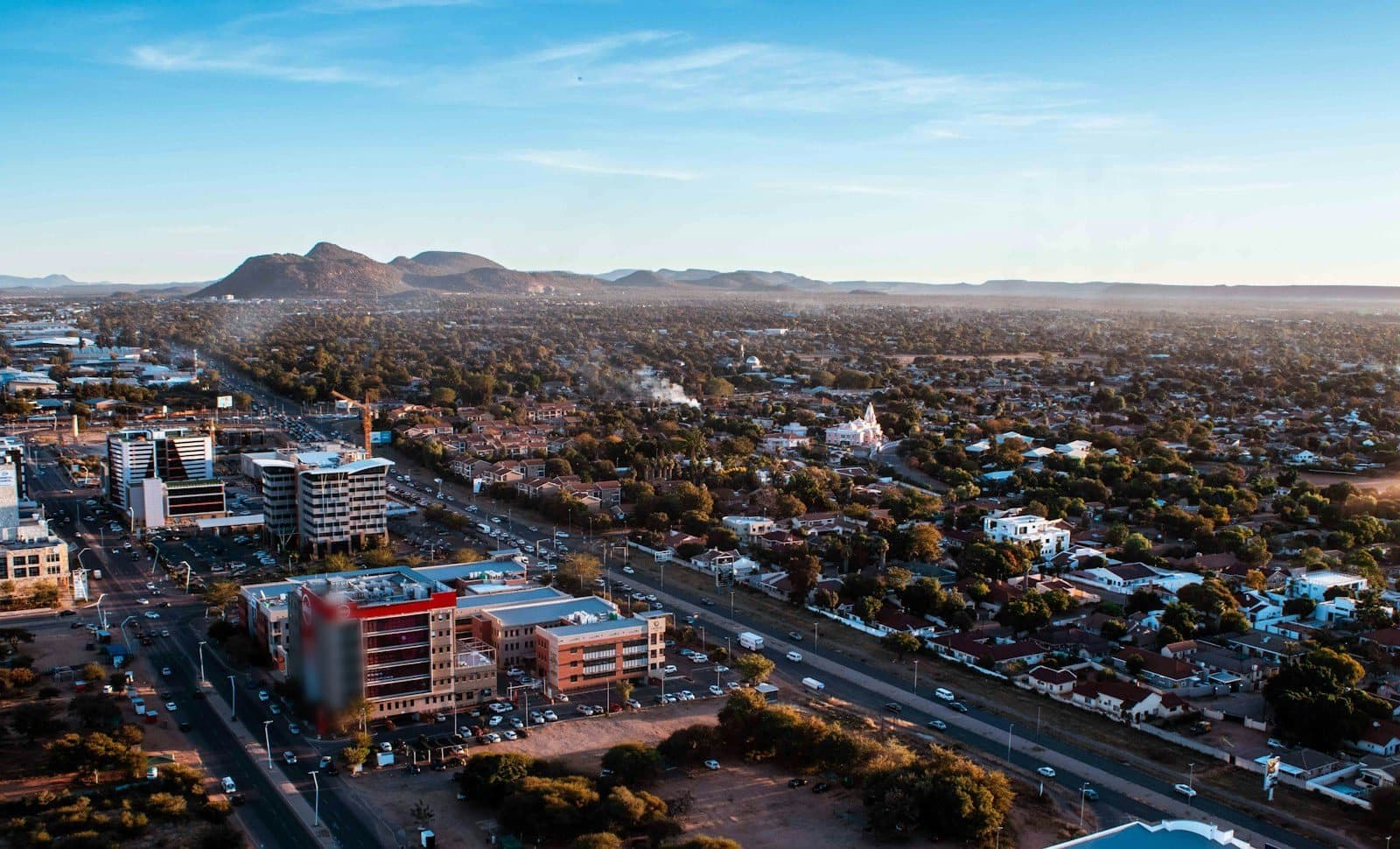
The services described are all planned, and several of them do not exist in the country today. Cancer care with two linear accelerators, heart care, kidney care and dialysis, transplant surgery, care for infectious disease, intensive care for adults and for children, children's medicine, trauma, and surgery on the brain and spine were all set out, along with the training centre meant to sit beside them. Complex electrophysiology with three-dimensional mapping, which treats a heart rhythm by finding the exact tissue causing it, is not offered anywhere in Botswana today.
Dr Moeng took the session through the advanced heart and cancer capabilities planned for the hospital, the ones that mark the difference between a good general hospital and a referral centre: structural cardiology, three-dimensional mapping, next-generation sequencing to read a tumour's own genetics before choosing a drug for it, stem cell transplantation, and CAR T-cell therapy, in which a patient's own immune cells are re-engineered to attack their cancer.
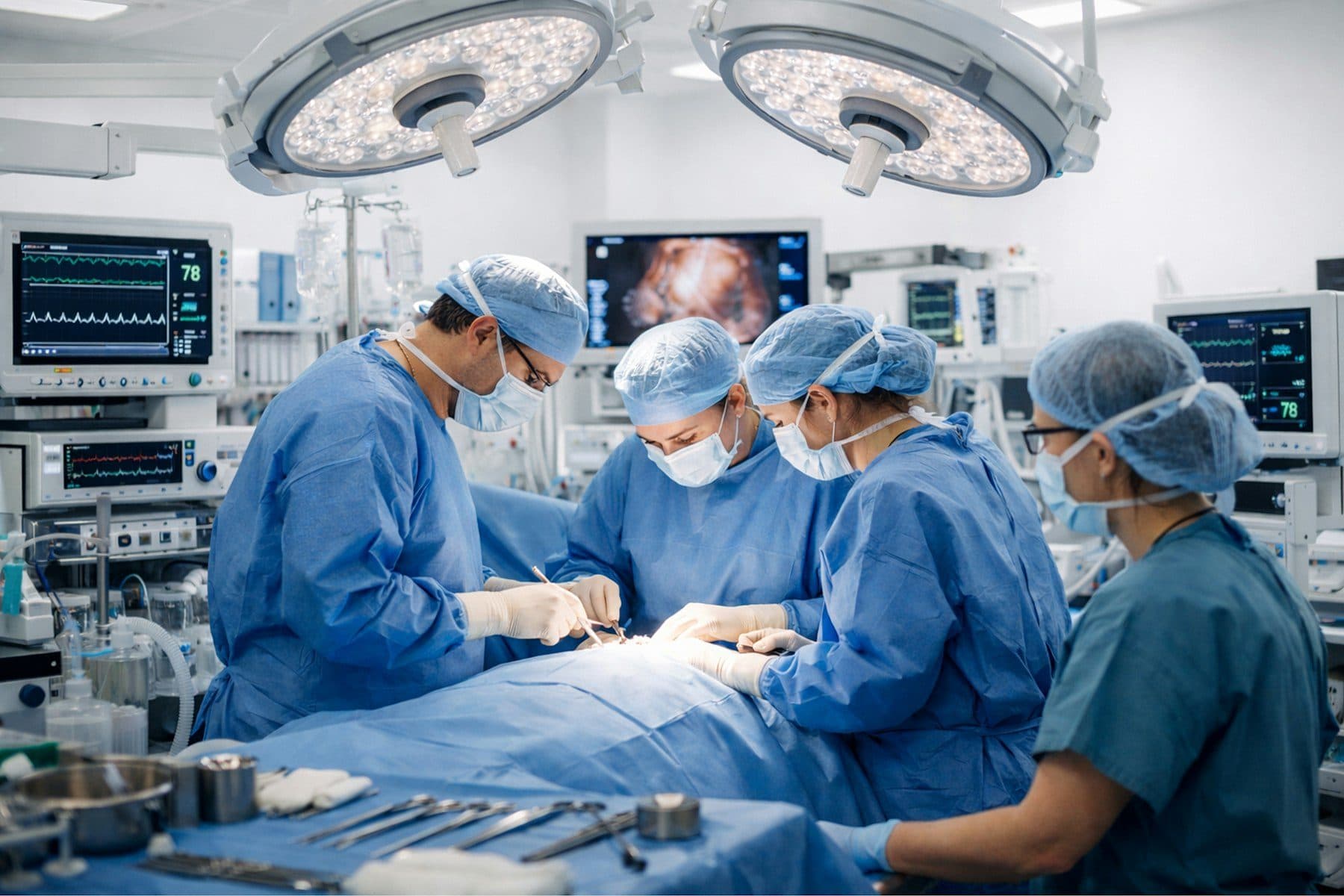
Two of the capabilities drew most of the interest, and both change what a hospital this size can attempt. A robotic-assisted surgical platform of the Da Vinci class, planned as the first in Botswana, lets a surgeon work through incisions a few millimetres across, which on a prostate or a hysterectomy means less blood lost, a shorter stay and a patient back at work in weeks instead of months. Telemedicine does something different, putting a specialist in another country onto a scan, into a theatre or in front of a patient over a connection. For a hospital building a service line faster than a country can train consultants, telemedicine is how the gap gets covered, and it is also how a patient in Maun reaches a specialist in Gaborone without making the trip.
Orange, and the line all of it runs on
The memorandum signed with Orange Botswana in September covers the connectivity the planned telemedicine service will need. A consultation given over a connection is only as good as the connection, so the line has to hold for the length of an operation and carry a scan across in seconds. The partnership was described as the thing that makes remote specialist care and robotic assistance dependable enough to put a patient's name against, and the same network reach will extend the service to clinics several hundred kilometres from Gaborone.
One estate: the hospital, and the medicines made beside it
The Special Economic Zone is the reason the development can be one estate instead of a building. Serviced land inside a single licensed area, under one authority, with imported medical equipment entering duty free and a licence running up to fifty years, is not something that can be assembled plot by plot across a city. The zone makes it possible to put the hospital, its manufacturing, its lodging and its commercial space on the same ground, and to build them as parts of one thing.
Pharmaceutical and medical-equipment manufacturing is planned on that land, and it sits beside the hospital because each one answers a problem the other has. The hospital is the factory's anchor customer from the first day it opens, which is the hardest thing for a new plant to find. The factory shortens the hospital's supply line for its own medicines and consumables to a few hundred metres, so a drug shortage somewhere else in the world stops being a cancelled treatment here. A hospital that makes its own essential medicines on its own site has the same independence in its pharmacy that the radiotherapy bunker gives it in oncology, and it is the second half of the same health-security argument.
The rest of the estate follows from the same logic. Lodging is planned for patients and the families who travel with them, because a man who has brought his mother five hundred kilometres for six weeks of radiotherapy needs somewhere to sleep that is not a corridor. Residences are planned for staff, since a hospital running three shifts needs its nurses to live within reach of it. Commercial space is planned on the lots around them for the pharmacies, laboratories, suppliers and services that collect around a hospital anyway, and putting them inside the zone keeps that trade, and its rent, on the project's own land.

An economy after diamonds
The project set the whole development against the government's economic transformation programme, whose nine priority sectors include healthcare, and against Vision 2036. Diamonds built this country and they are a finite resource with a price somebody else sets. Specialist healthcare sold to the region is a business that earns foreign currency every year, employs people who are expensive to replace, and gets more valuable as the population ages, which is close to the opposite shape of a mining revenue line. The development was described in those terms: construction work, permanent jobs, skills that transfer, tax paid to the state, and a service the country currently buys from other countries. Around 450 construction jobs are planned for the build, leading into hundreds of permanent clinical and operational roles, and the project intends to localise across both construction and operations. It is open to investors.
The Forbes Africa Botswana report
The Botswana special report is produced by Penresa, which makes the Africa Undiscovered series of country reports, and it is published with Forbes Africa, the African edition of Forbes, published from Johannesburg since 2011. The 2025 edition carried President Duma Boko, the Vice President, four other ministers and eleven companies, and no hospital development has appeared in a Botswana edition before. The report this interview was given for publishes in the second quarter of 2027, and what it carries is Penresa's to decide. In May 2024 Botswana's then Acting President, Slumber Tsogwane, named "the well-received Special Issue of Forbes Africa Magazine, dedicated to Botswana's development trajectory" as evidence of the country's rising international profile. Penresa reports print distribution across twelve African markets and Lusophone Africa, with delivery to more than fifteen thousand verified decision-makers, and it wrote the day after the interview to thank the Chairman, Dr Moeng and Ms. Nagafela and to invite the project to share the occasion publicly.
Dr Moeng, Hospital Superintendent
Dr Moeng took part online, joining while travelling back from the United States. He was in the conversation for the whole hour, answering on the clinical plan and on the technology while the people in Gaborone set out the rest. A hospital designed in part to close that distance was being explained by the doctor who will lead its clinical work, speaking across it, so the case for specialist care given over a connection was made in the room before anybody had to argue for it.
He described the hospital as an answer to a need for greater access to advanced care and for stronger capacity inside the country, and the project was framed through the session as a health-security investment with jobs and related industries following from it. The clinical team takes part in the development decisions from the start, so the people who will run the wards are shaping what gets built.
Asked how he came to medicine, he traced it back to growing up in Botswana during the HIV epidemic, to the country's own leadership through those years, and to the example of Benjamin Carson, the American surgeon who made his name operating on children's brains. He has spent his career since in advanced hospitals in the United States, and he put the project in those terms: what he has had to practise somewhere else is what Botswana should be able to offer at home.